
Most churches produce more than they sell. There is a study guide for the current series, a live worship album from the spring, a set of conference talks, and a children's curriculum that other churches keep asking to borrow. The material is finished. What tends to be missing is a way to hand it over that does not run through one person's inbox, with payments to match against email addresses and a file attached to every reply.
That last part is the real cost. A single PDF sold by email can take a morning: confirming who paid, replying to each buyer, and answering the one message from someone who paid on Sunday and is still waiting on Tuesday. It is also how a guide ends up forwarded to a group chat of thirty, which is generous in spirit and hard on the budget. The album, meanwhile, stays on a hard drive, because if one document takes a morning, nobody wants to find out what twelve audio files take.
Start with what you already have. Price each resource modestly, and decide what the money is for. In Cendance, every storefront sells into a fund you choose, so the album can fund the next recording and the guide can pay for the large-print copies people still ask for.
Setting a product up takes a few minutes. Create it, upload the files, add a cover, write a description, and publish. A product can carry several files, so an EP goes up track by track and a study guide can travel with its leader notes, and large audio files are fine. If you want the download links to stop working after a set period, turn on expiry and choose the number of days.
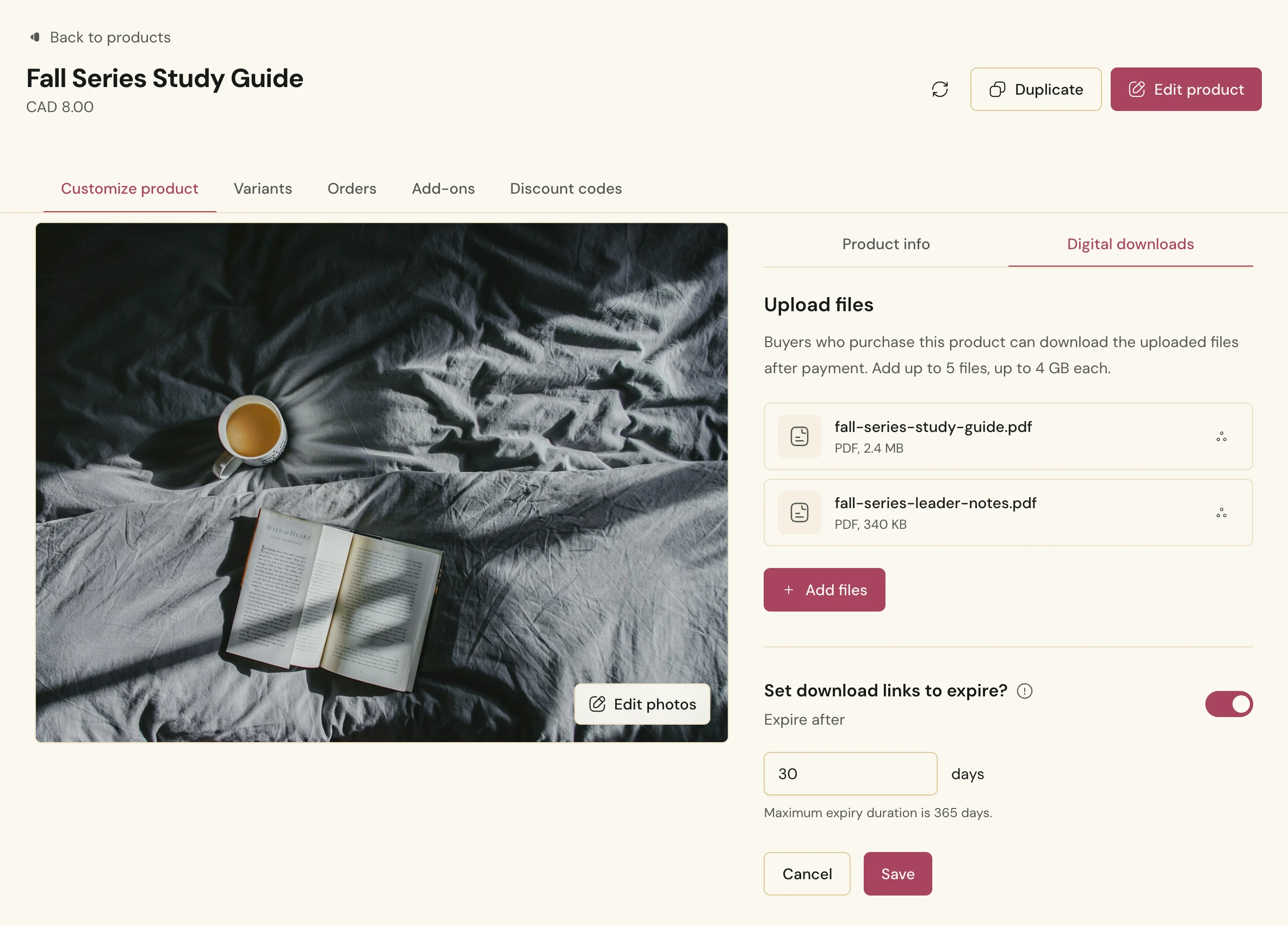 A digital product in Cendance Shop with two files attached and download links set to expire after 30 days.
Delivery is where the time comes back. A buyer opens your store link, taps the guide, and pays with a card. There is nothing to ship, so there is no delivery to arrange and no pickup to choose. Their receipt arrives a moment later with the download links inside it. Each link works a limited number of times, which keeps the file with the person who bought it. A link forwarded to thirty people runs out after the first few, rather than becoming an unofficial free edition. No one on your team matched a payment or attached a file.
The money behaves the same way. Sales sit with the fund you chose, and because a purchase is a purchase, they never appear on anyone's giving statement or tax receipt. If someone buys the wrong thing, refund the order and the download links close automatically.
You can still add a human touch to the moment after checkout. Write your own subject line and a short note for the thank-you email: what is inside, how the guide fits the series, and who to contact if a file will not open. And because buyers are matched to their profile in People, or added as new people if you allow it, the small group leader who bought the guide is easy to find when it is time to invite leaders to training.
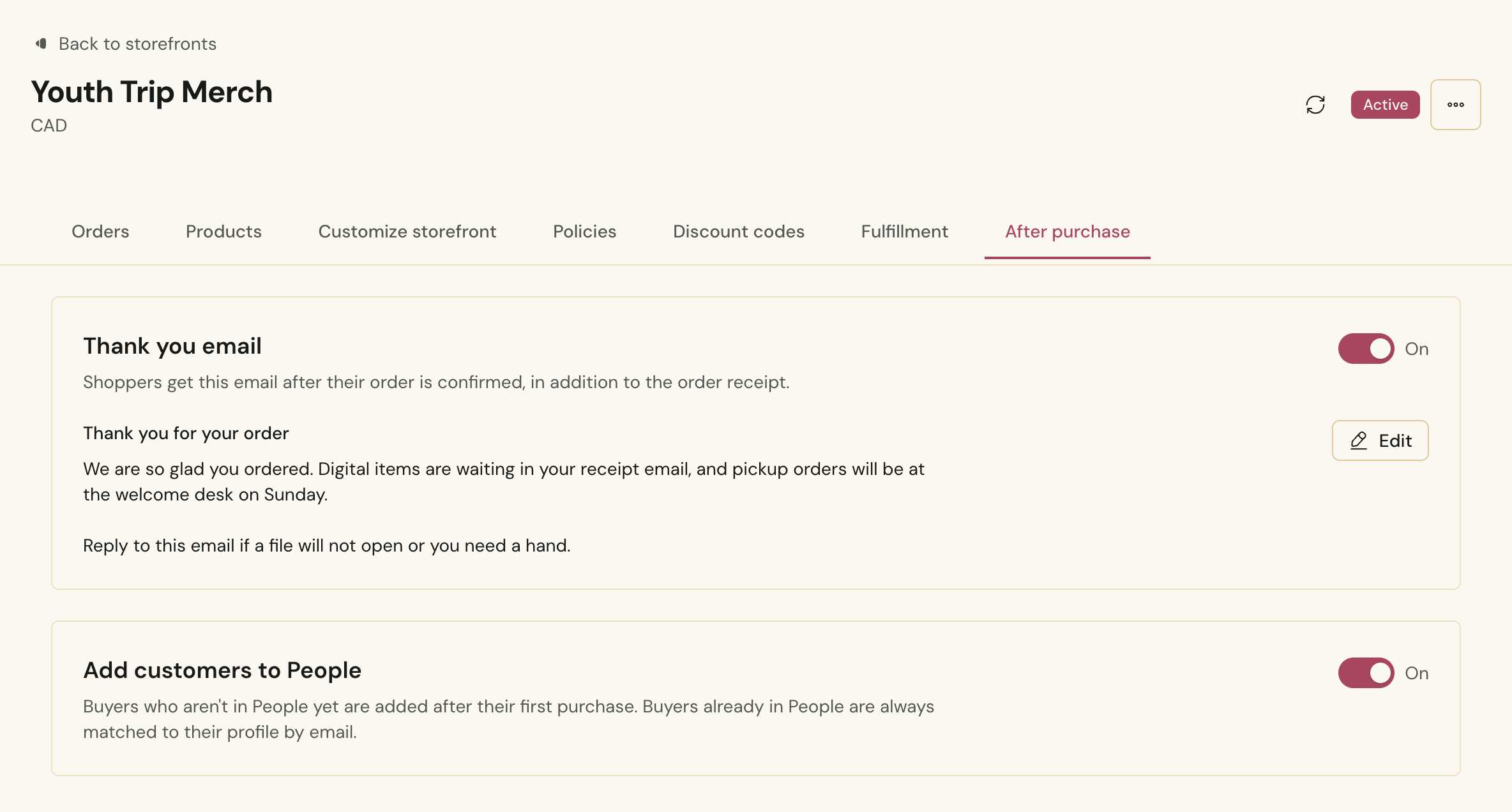 A storefront's after-purchase settings in Cendance Shop: the thank-you email and the switch that adds buyers to People.
Share the store link anywhere a link works: the bulletin, the group chat, the slide before service, the welcome email to first-time guests. Keep the hoodies in the same shop if you like. Physical items go to pickup or delivery, digital items go straight to the inbox, and someone buying both never has to think about the difference.
Run it this way and a resource you finished months ago starts serving people again, on their schedule rather than yours. The messages that come back are the good kind: a note from someone on their second read, or a request for the next series.
You will find products, storefronts, and orders under Shop in your Cendance dashboard. Upload the guide you already wrote, set a fair price, and let it deliver itself.


